
Why We Return to the Same City When the World Is So Large
There is a particular kind of travel decision that can be difficult to explain. A map is full of places we have never seen, yet we book another ticket to the city whose stations, squares and side streets we already know. From the outside, it may look as though curiosity has lost to habit. In reality, returning often answers a different need. New destinations offer surprise, but familiar ones can offer continuity, emotional safety and the rare pleasure of being understood by a place without having to learn it from the beginning. A city may hold the memory of a relationship, a turning point, a period of freedom or simply a version of ourselves that felt especially alive there. We do not always return because the city is objectively the best choice. We return because its meaning has become personal, and personal meaning is not measured by the number of countries left on a wish list.
A Familiar City Becomes Part of Our Personal Story
Environmental psychologists use the term place attachment for the bond people develop with locations that matter to them. The bond is not limited to a childhood home or the neighbourhood where someone lives. It can form during repeated holidays, a period of study abroad, regular work trips or one intense visit that happened at an important moment. A city gradually stops being a collection of attractions and becomes part of a person’s life story. The bridge is no longer just a bridge; it is where a difficult conversation ended well. The small café is not simply convenient; it is where someone sat alone and realised they could manage a new life. Once experiences like these settle into memory, the location becomes a physical container for emotions that are hard to summon elsewhere.
This helps explain why two travellers can react very differently to the same destination. One may see traffic, rain and ageing buildings, while the other sees familiarity, affection and proof of personal change. The emotional value of a city is built from what happened there, who was present and what the traveller needed at the time. Tourism research has repeatedly linked autobiographical memory and place attachment with the wish to return. A 2022 study involving 301 tourists found that memories connected with a rural destination were associated with intentions to revisit and recommend it, with place attachment helping to connect memory and future behaviour. The setting in that study was specific, but the human pattern is easy to recognise: when a journey becomes part of our biography, returning can feel like continuing a story rather than repeating a trip.
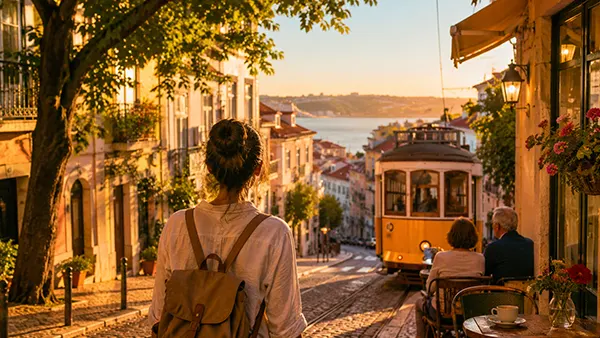
Time strengthens this effect because memory does not preserve a city like a perfect photograph. It selects, edits and combines. Minor inconveniences often lose their sharpness, while emotionally rich moments remain vivid: evening light on a familiar façade, the sound of trams, the first meal after arrival or the route back to a rented room. This does not mean every return is driven by idealisation. It means that memory gives some details greater weight than others. The city we revisit is therefore both real and remembered. We arrive in the present, but we also meet the version preserved in our minds. Part of the pleasure comes from comparing the two and noticing what has changed in the streets, in our companions and in ourselves.
Streets, Smells and Sounds Can Unlock Whole Chapters
Place memories are often sensory before they are verbal. A particular bakery smell, the echo inside an underground station or the texture of paving stones can bring back a scene more quickly than a deliberate attempt to remember it. This happens because memories are stored with elements of the context in which they were formed. When a similar cue appears again, it can reactivate details that seemed unavailable in everyday life. A returning traveller may suddenly recall the exact weather, the coat they wore or the mood of a morning from ten years earlier. The response can feel surprisingly strong because the city is not merely being observed; it is prompting a network of linked memories, emotions and bodily sensations.
Familiar routes have a special role in this process. Walking the same way from a station to a square creates a sequence the mind can anticipate: the corner shop, the narrow crossing, the first view of a tower, the turn towards the river. Repetition gives the route rhythm, and rhythm makes it personally meaningful. A 2026 study of urban memory narratives among 890 internal migrants in Dongguan found positive links between memory-based city stories, place attachment and life satisfaction. The study concerned residents rather than holidaymakers, so it should not be treated as a direct explanation of every repeat trip. Even so, it supports a broader point: stories about places can help people organise their relationship with a city and connect that relationship with identity and wellbeing.
The emotional power of sensory cues also explains why a return can be bittersweet. The restaurant is still there, but the person who once shared the table is absent. The square looks smaller than remembered. A neighbourhood that represented freedom now feels crowded, expensive or altered by tourism. These moments are not evidence that the return was a mistake. They show that attachment includes loss as well as comfort. Revisiting gives memory a current setting and sometimes corrects an image that has become too polished. It can help a traveller accept that a meaningful period has ended without pretending it never mattered. In this sense, the city acts as a witness: it holds traces of the past while making clear that life has moved forward.
Familiarity Can Offer the Rest That Novelty Cannot
Travel to a new city requires a steady stream of small decisions. Which neighbourhood is practical? Is this train going in the right direction? How late does the bus run? Is the street comfortable after dark? Where can someone eat without planning an hour ahead? None of these questions is necessarily difficult, but together they demand attention. In a familiar city, much of that work has already been done. The traveller knows the scale of the centre, recognises transport signs, understands local routines and has a rough sense of prices and distances. That knowledge frees mental energy. Instead of solving basic problems from morning to night, a person can settle into the visit more quickly and use attention for conversation, observation or simple rest.
Current psychological research supports the idea that familiarity can shape emotional responses to a setting. In a 2026 virtual-reality study, 72 participants experienced urban parks that differed in familiarity. Lower familiarity was associated with more negative affect, although personality also mattered: people did not respond to the same surroundings in identical ways. The finding should not be stretched into a rule that familiar places are always better. Some travellers feel energised by uncertainty, while others become tired or vigilant. The useful point is that a known environment can reduce one layer of demand. For someone arriving after a stressful year, caring responsibilities or prolonged decision fatigue, that reduction may be more valuable than another list of first-time sights.
Felt safety is part of this attraction, but it deserves careful distinction from actual safety. Knowing a route, recognising a district and understanding how the city works can create calm. Yet familiarity can also make people less alert to changes. A neighbourhood may have different transport arrangements, construction, crowd patterns or local risks since the previous visit. Returning travellers should still check current information and use ordinary judgement. Emotional safety is the sense that a place is manageable; objective safety depends on present conditions. The healthiest form of familiarity combines both: confidence based on experience, updated by attention to what is true now.
Returning Still Leaves Room for Something New
A repeat visit is not automatically a copy of the first. In fact, knowing the basics often makes a different kind of novelty possible. First-time travel tends to be organised around major landmarks because the visitor wants a clear introduction and may fear missing something essential. On later visits, that pressure weakens. There is time for a suburban market, a small museum, a local swimming pool, a long lunch or an ordinary residential street. The city becomes less like a checklist and more like a lived environment. Familiarity provides the frame, while curiosity moves into finer detail. The result may be less dramatic in photographs but richer in texture.
Repeated visits also reveal change that a single visit cannot show. Seasonal light alters buildings and public spaces. Businesses close, trees mature, tram lines extend and neighbourhoods gain or lose their character. A traveller who returns every few years develops a personal timeline of the city. This makes change visible in a way that residents may overlook and first-time visitors cannot compare. Recent tourism studies continue to connect emotional destination image, satisfaction, memorable experience and place attachment with the intention to return. The important word is emotional: practical qualities matter, but people often return because the city consistently produces a feeling they value, whether that feeling is ease, beauty, energy, privacy or belonging.
The best balance is often deliberate. A traveller can keep one or two rituals and change the rest: stay in a different district but revisit the same morning café, return to a favourite park while choosing unfamiliar evening plans, or travel in another season. This protects the sense of recognition without turning the visit into an attempt to recreate the past exactly. Re-creation usually disappoints because people, places and circumstances have changed. Continuity works better than replication. The city remains familiar enough to feel grounding, yet open enough to meet the person we are now.
Sometimes We Are Returning to Ourselves
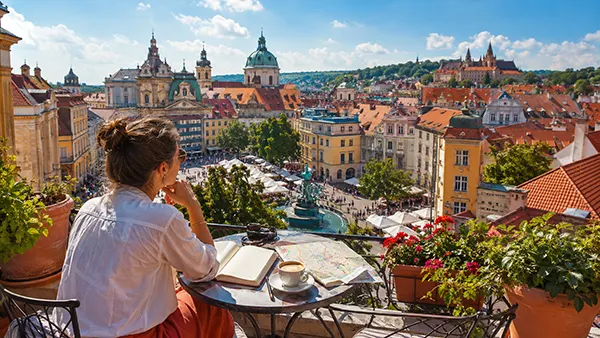
Cities can become linked to particular versions of identity. Someone may associate Lisbon with the first solo trip after university, Berlin with a period of artistic confidence, Edinburgh with family holidays or Naples with a relationship that changed the direction of life. Returning can briefly restore access to qualities that feel less available at home: independence, playfulness, courage, slowness or openness to strangers. The city does not magically create these traits, but it provides cues and routines connected with the time when they were expressed. In that sense, the traveller is not only revisiting a destination. They are checking whether a former self is still reachable and deciding which parts of that self belong in the present.
This is one reason a return may become important during transition. After bereavement, separation, retirement, parenthood, migration or a demanding period at work, people often look for continuity. A familiar city offers a stable reference point: the river still follows its course, the square still opens at the end of the street, and the route from the station can still be walked without a map. Such continuity does not erase change, but it can make change easier to hold. The person can measure what has happened since the last visit and recognise that life has altered without becoming entirely unfamiliar. A place that has accompanied several stages of life can function almost like a long-standing acquaintance.
Other people are often central to the attachment. We may return because friends live there, because a family member loved it, or because the city contains shared rituals that keep a relationship alive. Even when travelling alone, the remembered presence of others shapes how a place feels. This social layer is why attachment can survive disappointing weather, rising prices or the closure of a favourite venue. The bond is not based on a perfect travel product. It is woven from conversations, habits and mutual history. A different city may offer better museums or cheaper hotels, yet it cannot reproduce the exact human meaning of the familiar one.
Choosing the Same City Is Not a Failure of Curiosity
Modern travel culture often treats novelty as a measure of a life well lived. Maps are counted, country totals are compared and returning can seem less ambitious than adding another destination. That view confuses breadth with depth. Seeing many places can be rewarding, but knowing one place across seasons and years has its own value. Repetition makes it possible to notice ordinary life, build relationships, understand local rhythms and move beyond the visitor’s first impression. A person who returns is not necessarily avoiding the wider world. They may be choosing a slower, more attentive way of relating to one part of it.
It is still worth asking what the return is doing for us. Comfort can be restorative, but it can also become avoidance when anxiety makes every unfamiliar destination feel impossible. A useful test is emotional rather than numerical. Does the thought of returning bring warmth and genuine interest, or only relief from having to decide? Is the city still being encountered as it is, or used to chase a past that cannot be restored? Would one small change in the trip feel appealing or threatening? Honest answers help separate meaningful attachment from rigid habit. There is no obligation to choose novelty, but there is value in knowing whether the choice is free.
The world is large, but a human life is not required to cover it evenly. Some places remain dots on a map; others become part of our internal geography. We return because familiar streets remember our footsteps, because a certain view still settles the mind, because someone we love is connected with the place, or because we feel more recognisable to ourselves there. None of this makes new travel less valuable. It simply explains why the promise of the unknown does not always outweigh the pull of somewhere known. Sometimes the most honest journey is not towards a place we have never seen, but back to one whose meaning is still changing with us.