
Social Comparison Online: Why Other People’s Lives on the Internet Affect Self-Esteem
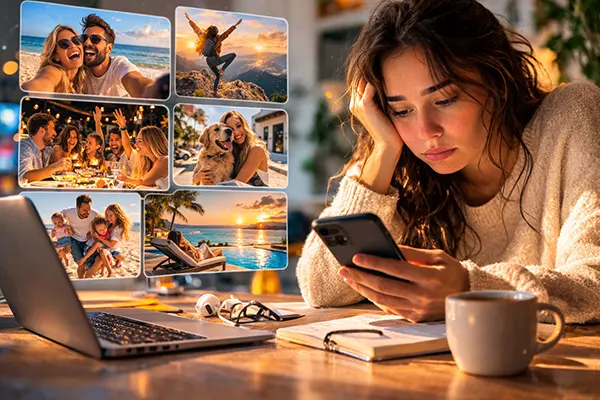
The internet has transformed how people observe and evaluate one another. Photos of holidays, career achievements, fitness progress and everyday moments appear constantly in social feeds. At first glance this information seems harmless, yet psychological research shows that exposure to other people’s curated lives often influences how individuals judge their own success, appearance and happiness. The mechanism behind this process is known as social comparison. When individuals repeatedly compare themselves with others in digital environments, their perception of personal progress and life satisfaction can shift in subtle but powerful ways. Understanding why this happens is essential in a time when online communication forms a large part of everyday social interaction.
The Psychology of Social Comparison in Digital Environments
The concept of social comparison was first described by psychologist Leon Festinger in 1954. He suggested that people evaluate their abilities and opinions by comparing themselves with others. In everyday offline situations these comparisons happen occasionally and usually involve individuals from one’s immediate environment. Online communication changes this dynamic dramatically because users are exposed to hundreds or even thousands of people whose lives appear successful, exciting or highly productive.
Digital environments amplify comparison because they remove many of the natural limits found in offline life. A person may compare their own achievements with people living in different countries, working in unrelated industries or possessing very different resources. These comparisons rarely account for context. Instead, the human mind tends to interpret visible outcomes—such as a promotion, travel photo or fitness transformation—as direct indicators of personal success.
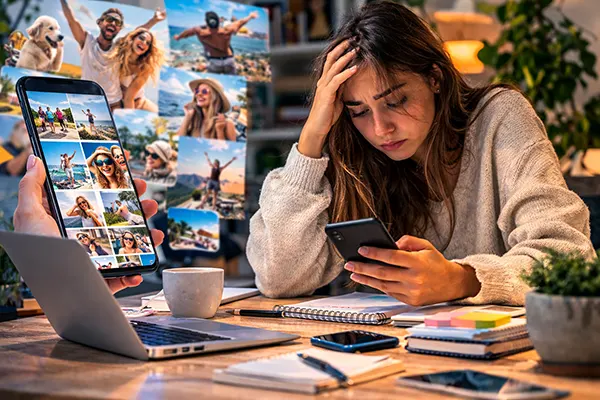
Psychologists often distinguish between upward and downward comparison. Upward comparison occurs when people compare themselves with someone they perceive as more successful. While it can sometimes motivate improvement, it frequently leads to dissatisfaction or feelings of inadequacy. In online spaces, upward comparison dominates because users tend to present their most positive experiences rather than everyday difficulties.
Why Online Content Creates Distorted Perceptions
Online communication encourages selective self-presentation. People usually share achievements, celebrations and visually appealing moments rather than routine experiences. As a result, observers may unconsciously assume that other individuals enjoy consistently fulfilling lives. This selective visibility creates a cognitive bias in which the viewer compares their full reality—including problems and uncertainty—with someone else’s carefully chosen highlights.
Algorithms that organise social feeds further intensify this effect. Content that attracts attention—luxury travel, dramatic life changes or impressive personal achievements—appears more frequently. Over time users may perceive such events as normal or expected. When their own lives do not match this apparent standard, feelings of frustration or self-doubt can increase.
Another important factor is repetition. Seeing similar messages about success, beauty or wealth repeatedly reinforces the belief that these outcomes represent common life paths. Psychologists describe this as the availability heuristic: people estimate what is typical based on what they see most often. In highly curated online environments this mental shortcut can lead to unrealistic expectations about career progress, relationships or financial stability.
How Online Comparison Influences Self-Esteem and Anxiety
Self-esteem depends partly on how individuals interpret their achievements relative to others. When comparisons occur occasionally, they can help people evaluate goals realistically. However, continuous comparison—especially with idealised representations—may undermine self-confidence. Studies conducted during the 2020s repeatedly found links between intensive social media use and lower self-esteem among adolescents and young adults.
One reason lies in the brain’s emotional processing. Humans evolved in small social groups where comparisons occurred among familiar peers. The digital environment exposes individuals to a much larger and more diverse group of people, including celebrities, influencers and highly specialised professionals. This scale can make personal progress appear insignificant even when it is objectively meaningful.
Anxiety often emerges when individuals begin to interpret other people’s achievements as evidence of their own shortcomings. Instead of recognising that different circumstances shape life outcomes, users may assume they are falling behind. Over time this perception may contribute to chronic stress, reduced motivation or avoidance of social interaction.
The Role of Validation and Online Feedback
Another psychological mechanism that reinforces comparison is the system of visible reactions such as likes, shares or comments. These signals act as quick indicators of social approval. When people receive strong positive feedback, they experience a short burst of reward in the brain’s dopamine system. Observing others receive more attention may trigger the opposite reaction—self-criticism or disappointment.
This dynamic can turn online participation into a cycle of evaluation. Individuals not only compare their achievements with others but also compare levels of public approval. For example, a travel photograph that receives modest engagement might appear less valuable when contrasted with highly popular posts from other users.
Over time, reliance on external validation can weaken internal sources of self-esteem. Instead of evaluating experiences based on personal satisfaction or meaningful progress, individuals may judge their lives through perceived audience response. Psychologists note that this shift can reduce resilience when criticism or lack of attention occurs.
Developing Healthier Relationships with Online Information
Despite these challenges, the internet does not inevitably harm self-esteem. The key factor lies in how individuals interpret what they see. Recognising that online content reflects selective storytelling rather than complete reality can significantly reduce negative comparisons. Many psychologists recommend approaching social feeds with the same critical awareness used when viewing advertising or entertainment media.
Another helpful strategy involves focusing on personal benchmarks rather than external standards. Instead of measuring progress against someone else’s career or lifestyle, individuals can evaluate their development relative to their own goals and circumstances. This approach shifts attention from competition toward long-term personal growth.
Research published in the early 2020s also highlights the importance of intentional online behaviour. Limiting passive scrolling and prioritising meaningful interaction—such as conversations with friends or participation in supportive communities—reduces the likelihood of harmful comparison patterns.
Practical Psychological Strategies to Reduce Harmful Comparison
One effective method is mindful awareness. When feelings of inadequacy arise after viewing someone else’s achievements, pausing to identify the comparison process can weaken its emotional impact. Simply recognising that the brain is reacting to curated information helps restore a more balanced interpretation.
Another strategy involves diversifying online content. Following educational, creative or reflective accounts instead of purely lifestyle-focused profiles broadens the range of perspectives visible in daily feeds. Exposure to realistic discussions about challenges and personal development counteracts the illusion that everyone else lives without difficulty.
Finally, strengthening offline experiences remains essential. Activities that build competence—such as learning new skills, participating in physical exercise or engaging in meaningful work—provide stable sources of confidence that are less dependent on external comparison. When individuals feel grounded in their own progress, online representations of other people’s lives become less threatening to self-esteem.